
Concrete Cube & Core Testing
Compressive strength verification for structural concrete at 7 and 28 days
How is concrete cube testing done as per IS 516?
Concrete cube testing measures the compressive strength of concrete. Standard 150 mm cubes are cast, cured in water at 27 ± 2 °C, and crushed in a compression testing machine at 7 and 28 days; the strength is the failure load divided by the cross-sectional area. The test follows IS 516. NKMPV performs concrete cube and core testing as a NABL-accredited laboratory.
Concrete cube testing is the most widely performed construction material test in India. It determines whether the concrete placed on site meets the designed compressive strength (fck) as required by IS 456.
What Is Concrete Cube & Core Testing?
Test Parameters & Acceptance Criteria
Compressive strength results are evaluated against the characteristic strength (fck) specified in the structural design. IS 456 Table 11 defines the acceptance criteria based on individual and mean results.
| Parameter | Value / Range | Unit | Standard |
|---|---|---|---|
| Compressive Strength (Cube) — 7 Days | ~65-70% of 28-day strength | N/mm² (MPa) | IS 516 Cl. 5.5 |
| Compressive Strength (Cube) — 28 Days | fck + 1.65s (target mean) | N/mm² (MPa) | IS 456 Cl. 16.1, Table 11 |
| Individual Cube Result (Minimum) | ≥ fck - 3 N/mm² | N/mm² | IS 456 Table 11 |
| Mean of 3 Cubes (Minimum) | ≥ fck + 0.825s or fck + 3 | N/mm² | IS 456 Table 11 |
| Core Compressive Strength | ≥ 85% of equivalent cube strength | N/mm² | IS 456 Cl. 17.4.3 |
| Core Density | 2300-2500 (normal concrete) | kg/m³ | IS 516 |
| Cube Size (Standard) | 150 mm x 150 mm x 150 mm | mm | IS 516 Cl. 4.1 |
| Loading Rate | 140 kg/cm²/min (13.7 MPa/min) | kg/cm²/min | IS 516 Cl. 5.5 |
Applicable Indian Standards
Hardened Concrete — Methods of Test (Part 1: Compressive, Flexural & Split Tensile Strength)
Plain and Reinforced Concrete — Code of Practice (4th Revision)
Methods of Sampling and Analysis of Concrete
Concrete Mix Proportioning — Guidelines
Method of Making, Curing and Determining Compressive Strength of Accelerated-Cured Concrete Test Specimens
Equipment Used
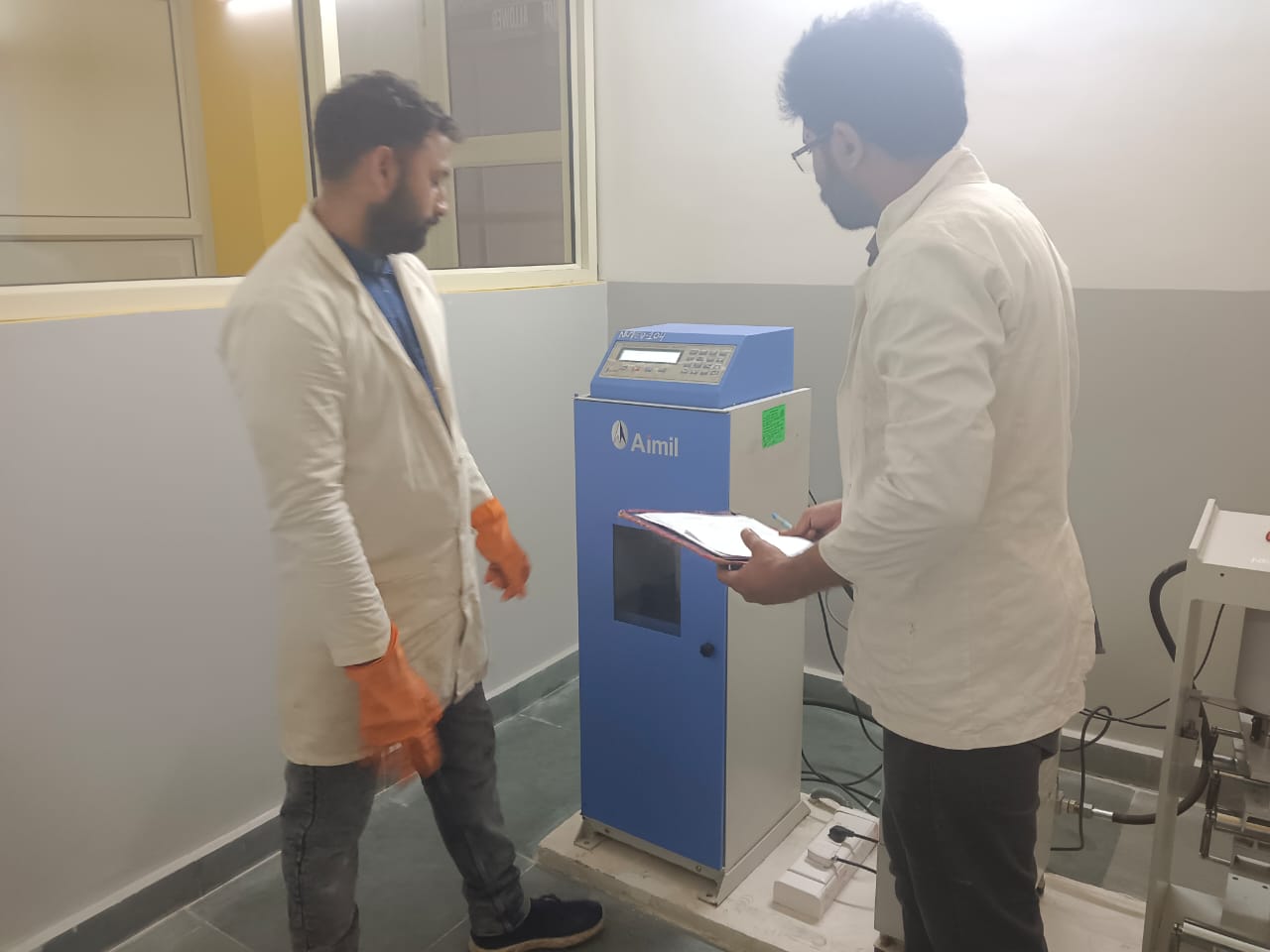
Compression Testing Machine (CTM)
AIMIL AIM-311-D (Digital)
2000 kN with automatic pace rate control and digital readout
CalibratedCube Moulds (150 mm)
Cast iron IS standard, set of 50
150 mm x 150 mm x 150 mm, machined to ± 0.1 mm tolerance
CalibratedCuring Tank
Thermostatically controlled
500-cube capacity, temperature maintained at 27 ± 2°C
CalibratedCore Cutting Machine
Hilti DD 200 Diamond Coring System
75 mm and 100 mm diameter cores, up to 500 mm depth
CalibratedCore End Grinding/Capping Equipment
Sulphur capping station and grinding wheel
Ensures plane parallel ends within 0.05 mm per IS 516
CalibratedWeighing Balance
Sartorius 30 kg capacity
Least count 1 g, NABL-calibrated
CalibratedTesting Process
Sampling at Site
15-20 minutesFresh concrete is sampled from the transit mixer or batching plant as per IS 1199. A minimum of 3 cubes per 50 m³ of concrete (or per day's work) is collected. The sampling point is selected after discharging the initial 0.5 m³ to ensure a representative batch. Slump is recorded before casting cubes.
Cube Casting
10-15 minutes per setThe concrete sample is filled into oiled 150 mm cube moulds in three layers. Each layer is compacted with 35 strokes of a tamping rod (16 mm diameter, 600 mm long) and the mould is vibrated on a vibrating table. The surface is levelled flush with the mould top using a trowel. Moulds are labelled with date, mix grade, and location reference.
Initial Curing & Demoulding
24 hoursCast cubes are covered with wet gunny bags and left undisturbed at site for 24 ± 0.5 hours. After 24 hours, the cubes are demoulded, identification marks are applied with waterproof marker, and they are immediately transferred to the curing tank at the lab. Temperature during initial setting must not fall below 15°C.
Water Curing
7 or 28 daysDemoulded cubes are submerged in the curing tank maintained at 27 ± 2°C as per IS 516. The water is kept clean and changed weekly. Cubes are cured until the designated testing age — 7 days for early strength indication and 28 days for the acceptance test. The tank capacity allows NKMPV to cure up to 500 specimens simultaneously.
Compression Testing
2-3 minutes per cubeOn the test date, cubes are removed from the curing tank, surface-dried, and weighed. Each cube is placed centrally on the CTM platen with the cast face perpendicular to the loading direction. Load is applied at a continuous rate of approximately 140 kg/cm²/min (5.25 kN/s for 150 mm cubes) until failure. The maximum load at failure is recorded.
Calculation & Reporting
Same dayCompressive strength is calculated as the failure load divided by the cross-sectional area of the cube (22,500 mm² for 150 mm cubes). Results are reported in N/mm² (MPa) rounded to the nearest 0.5 N/mm². The test certificate includes individual cube strengths, mean strength, specimen weight, density, failure pattern, and compliance assessment against IS 456 Table 11.
Where This Test Is Used
Detailed Information
Concrete Core and Concrete Cube Testing
Concrete has been one of the most widely used materials in construction due to its affordability, versatility, and durability. Its ability to withstand compressive forces makes it ideal for a range of applications, from residential buildings to infrastructure projects such as bridges, dams, and highways. The primary measure of concrete’s ability to resist compressive forces is its compressive strength. This strength is essential for determining the concrete's suitability for load-bearing structures. Testing the compressive strength of concrete is an essential part of quality control in construction. There are two major testing methods to determine this strength:- Concrete Cube Testing: This is typically done with fresh concrete and is a standardized method to test the concrete's quality during the mixing and casting phase.
- Concrete Core Testing: This is used for assessing the strength of hardened concrete, particularly for structures already in place, especially when there is a need to evaluate the quality of in-situ concrete after curing.

- Compressive Strength of Concrete Cube
- Preparation of the Concrete Mix:
- The first step is to prepare the concrete mix. The mix proportions of cement, aggregates (fine and coarse), water, and any additives are carefully designed based on the structural requirements and the desired strength. These proportions should be determined using a suitable mix design method, such as the IS 10262:2009 for normal concrete mixes or IS 456:2000 for reinforced concrete.
- During mixing, the materials should be thoroughly combined to achieve a uniform consistency and prevent segregation.
- Casting the Concrete Cubes:
- The fresh concrete is poured into standard 150 mm x 150 mm x 150 mm steel or non-corrosive molds, which are cleaned and oiled beforehand to ensure smooth removal after curing.
- Concrete is poured in layers and compacted to remove air bubbles, which could affect the results. This is typically done with a vibrating table or hand compaction for smaller quantities of concrete.
- The molds are filled to the top, and the concrete is leveled off, ensuring that the surface is smooth and even.
- Curing of Concrete Cubes:
- After the cubes are cast, they need to be properly cured to allow the cement to hydrate and harden. Curing is essential because it directly influences the strength and durability of the concrete.
- The cubes are initially kept in a temperature-controlled room or environment at 20°C to 25°C for 24 hours. This ensures the initial setting process occurs effectively.
- After 24 hours, the cubes are demolded, and they are submerged in water at 20°C until the test date. The cubes are usually cured for a minimum of 7 days, with 28 days being the standard curing time for most concrete mixes, which corresponds to the time required for full hydration of the cement.
- Compression Testing:
- After curing, the concrete cubes are subjected to compression testing using a Compression Testing Machine (CTM). The cube is placed in the machine so that the load is applied centrally, and a gradually increasing force is applied until the cube fails.
- The maximum load at failure is recorded, and the compressive strength is calculated using the formula:
- PPP is the load at failure in Newtons (N),
- AAA is the cross-sectional area of the cube face in square millimeters (mm²).
- IS 516:1959: "Methods of Tests for Strength of Concrete" provides the detailed procedures for conducting concrete strength tests, including cube testing.
- IS 1199:1959: "Methods of Sampling and Analysis of Concrete" outlines the appropriate methods for taking concrete samples and preparing the specimens for testing.
- IS 455:1989: "Code of Practice for Plain and Reinforced Concrete" includes guidance on ensuring that concrete meets the desired strength requirements for plain and reinforced concrete structures.
 2.4. Benefits of Concrete Cube Testing
The importance of concrete cube testing lies in its ability to ensure the quality and reliability of the concrete used in construction. The key benefits of concrete cube testing include:
2.4. Benefits of Concrete Cube Testing
The importance of concrete cube testing lies in its ability to ensure the quality and reliability of the concrete used in construction. The key benefits of concrete cube testing include:
- Quality Control: Cube testing provides an essential check on the concrete quality, ensuring that the mix proportions, curing conditions, and handling processes are correct.
- Compliance with Design Requirements: By testing concrete before or during construction, engineers can confirm that the concrete meets the compressive strength specified in the design, which ensures the structural safety of the project.
- Predicts the Performance of Concrete: The compressive strength obtained from cube tests helps engineers predict how the concrete will perform when subjected to real-world loading conditions, such as during service or extreme environmental conditions.
- Early Detection of Potential Issues: If the concrete does not meet the expected strength, cube testing can detect this issue early, which helps avoid major structural failures later on.
- Standardized and Cost-effective: Cube testing is simple, widely understood, and standardized, making it one of the most cost-effective methods of quality control.
- Compressive Strength of Concrete Core
- Core Extraction:
- A diamond-tipped drillis used to extract cylindrical cores from the concrete structure. The diameter of the core is typically 75 mm to 100 mm, and its length should be at least twice its diameter.
- It is important to extract the cores from the correct location in the structure, as areas with defects, such as cracks or honeycombing, should be avoided to prevent skewed results.
- Preparation of the Core Sample:
- After extraction, the core is cleaned thoroughly to remove any dirt or debris that could affect the test results.
- If necessary, the core is trimmed to ensure that the ends are flat and perpendicular to the axis of the core to ensure an accurate and consistent measurement of strength.
- Compression Testing:
- The prepared core is placed in a Compression Testing Machine (CTM). The machine applies an increasing compressive load until the core fails.
- The maximum load at failure is recorded, and the compressive strength is calculated using the formula:
- fccf_{cc}fcc is the compressive strength of the core (in N/mm² or MPa),
- PPP is the applied load at failure (in Newtons),
- AAA is the cross-sectional area of the core (in mm²).
- Correction Factor:
- If the core is shorter than twice its diameter, a correction factor may be applied to the compressive strength value to account for any inaccuracies caused by the aspect ratio of the core.
- IS 516:1959provides detailed procedures for testing the compressive strength of cores.
- IS 1199:1959outlines the methods for core sampling and preparation.
- IS 3370-2:2009provides guidance for core testing in applications involving liquid storage structures, such as tanks and silos.

3.4. Benefits of Concrete Core Testing
Concrete core testing is a crucial method for assessing the compressive strength and overall quality of hardened concrete in existing structures. While concrete cube testing is useful for fresh concrete, core testing is the go-to method when dealing with already constructed elements. Here are the key benefits of core testing:- Accurate In-Situ Strength Assessment
- Verification of Concrete Quality
- Detection of Concrete Defects and Inhomogeneities
- Cracksor voids in the concrete,
- Honeycombing(air pockets or poor compaction),
- Delamination(separation of layers of concrete),
- Deteriorationor chemical damage (such as corrosion of reinforcement).
- Assessment of Concrete Durability and Integrity
- Aid in Structural Rehabilitation and Repairs
- Time and Cost Efficiency for Existing Structures
- Compliance with Safety Standards and Codes
- Accurate Analysis for Life Cycle Assessment
- Documenting the Quality of Construction for Record Keeping
- Facilitates Post-Construction Evaluation and Performance Monitoring
- Legal and Insurance Documentation
- Comparison of Concrete Cube and Concrete Core Testing
| Aspect | Concrete Cube Testing | Concrete Core Testing | |
| Purpose | To assess the quality of fresh concrete | To evaluate in-situ strength of hardened concrete | |
| Test Type | Non-destructive (before curing) | Destructive (after curing) | |
| Standard Specimen | Cube (150 mm x 150 mm x 150 mm) | Cylinder (75 mm to 100 mm diameter) | |
| Testing Procedure | Cast, cure, and test | Extract core, clean, and test | |
| Time | Quick (results within a day) | Longer (due to extraction and testing) | |
| Use Case | Strength estimation in construction | Assessing strength in existing structures | |
| IS Code | IS 516:1959, IS 1199:1959 | IS 516:1959, IS 3370-2:2009 | |
| Cost | Lower cost | Higher cost due to core extraction | |
| Reliability | Provides estimates for fresh concrete strength | Provides direct, real-world strength measurements | |
| Additional Considerations | Lower precision when concrete is not compacted well | Accurate for assessing actual in-place strength |
- Conclusion
Photos & Lab Images
Why Choose NKMPV for Concrete Cube & Core Testing?
Same-Day Results
Cubes are tested on the exact scheduled date (7th or 28th day). Test certificates are generated and dispatched the same day — no delays that hold up your construction schedule.
NABL Accredited Reports
Our compressive strength test reports carry NABL accreditation under ISO/IEC 17025:2017, accepted by all government departments, municipal corporations, and regulatory authorities.
500-Cube Curing Capacity
Our thermostatically controlled curing tank accommodates 500 cubes simultaneously, allowing us to serve multiple large projects without scheduling backlogs.
On-Site Sampling & Core Cutting
Our technicians visit your site for cube sampling during pours and for diamond core cutting from existing structures. We serve the entire Tri-City area and surrounding districts.
Digital CTM with Auto Pace Rate
Our 2000 kN digital CTM features automatic loading rate control, ensuring every test is conducted at the IS 516-specified rate of 140 kg/cm²/min — eliminating operator-induced variability.
Complete Concrete Testing Suite
Beyond cube and core testing, we offer mix design (IS 10262), rebound hammer, UPV, flexural strength, and water permeability testing — a one-stop solution for all concrete quality needs.
Frequently Asked Questions
The compressive strength test per IS 516:1959 (Reaffirmed 2018) determines the cube strength of hardened concrete to verify achieved grade. Procedure: 150 mm × 150 mm × 150 mm cubes (or 100 mm cubes for smaller aggregates) are cast in three layers, each compacted with 35 strokes of a tamping rod or via vibration. Cubes are demoulded after 24 hours and water-cured at 27 ± 2°C until testing age (typically 7 and 28 days). At testing, the cube is placed in a compression testing machine and loaded at 14 N/mm²/min until failure. Compressive strength = Failure Load / Cross-sectional Area, reported in N/mm². For each grade, acceptance per IS 456 requires the average of three cubes ≥ specified strength and individual cube ≥ specified − 4 N/mm².
The core cutting test (IS 1199 / IS 516 Part 5) is used when: (1) cube samples are unavailable or in dispute — typical in forensic investigations and acceptance disputes; (2) existing structure condition assessment — to determine in-situ strength of decades-old concrete; (3) verification of cube test results — when site-cured cubes show suspicious low strength; (4) post-distress investigation — to characterise concrete after fire, blast, or chemical attack. Procedure: A diamond-tip core drill extracts 100 mm or 150 mm diameter cores from the structure. Cores are trimmed to height = diameter, capped with sulphur compound or unbonded neoprene pads, and tested in compression. Apply correction factors for L/D ratio, moisture, age, and any reinforcement intercepted by the core. NKMPV provides both NABL-accredited cube testing and core extraction services.
Per IS 456:2000 Clause 15.2.2 sampling frequency: (1) Concrete quantity 1–5 m³: 1 sample (3 cubes). (2) 6–15 m³: 2 samples (6 cubes). (3) 16–30 m³: 3 samples (9 cubes). (4) 31–50 m³: 4 samples (12 cubes). (5) Above 50 m³: 4 samples + 1 additional sample per 50 m³ or part. Each sample = 3 cubes for 28-day testing (some specifications add 3 more cubes for 7-day testing). NHAI and MoRTH specifications may require additional cubes for early-strength verification (7-day) and proof of design strength (90-day for slag/fly-ash mixes). All cubes must be cast at the point of placement (not the batching plant) using site-curing conditions.